CA's Workshop
Workshops
Stories, Publications and Articles of Conservation Alliance.
VIDEO PUBLICATIONS
Join our Events
ANNOUNCEMENT
Across West Africa, forest cover has been reduced to less than 30% of its potential extent due to logging, agricultural expansion, mining and other human activities. The highly fragmented forest patches that remain continue to be de-graded or completely lost at an alarming rate….. Read more
As part of CA’s strategy to support the Conservation of biodiversity through critical functions including biological research, policy review, advocacy, environmental education and training of resource managers, the Northern Program has been established with its office at Tamale, Kunevilla Residential Area, Block G, House No. 11. Read more
Rocks As long as forests are left undisturbed or are harvested sustainably in an ecologically sound manner, the option for future land uses are left open. As long as forests are left undisturbed or are harvestedsustainably in an ecologically sound manner, the option forfuture land uses are left open. Once forests are damaged and cleared their ecological diversity declines, species are lost and irreversible ecological and environmental changes occur
Conservation Alliance International (CA) has called on the government to promote biodiversity offset initiative as a system to reduce degradation of our forests, water and other natural resources. CA said the current area of intact forest which is estimated between 15,800 sq. km and 17,200 sq. km representing between 10.9 and 11.8% of the original cover indicates that Ghana has lost substantial portion of its rich biological resources to uncontrolled and uncoordinated development activities….. Read more
Agricultural Challenges In Northern Ghana
Agriculture is a major economic activity in Ghana. The Northern regions of the country (together with the Afram and Accra Plains) have been described as the Bread Basket Region (BBR) of Ghana. This is primarily due to the huge agricultural potential of these areas. Unfortunately, many parts of the northern regions face severe weather conditions including periodic flooding and drought. Flooding is particularly severe from August to October, with the peak in September…… Read more.
This report is based on a study commissioned by the Sustainable Tree Crops Program (STCP), which is hosted by the International Institute of Tropical Agriculture (IITA) Ghana. The aim of the study is to develop a strategy for forest corridor connectivity in two protected areas (Krokosue Hills Forest Reserve – KHFR and Bia Conservation Area – BCA) of the Western region of Ghana under the European Union funded Cocoa Sector Support Program Phase 2 (EU-CSSP II). The EU-CSSP II pro-gram broadly aims to improve the sustainability of cocoa production and livelihood of smallholder cocoa farmers by contributing to the growth in cocoa farming income in an environmentally and socially responsible manner……. Read more
National Monitoring Support Initiative (NMSI)
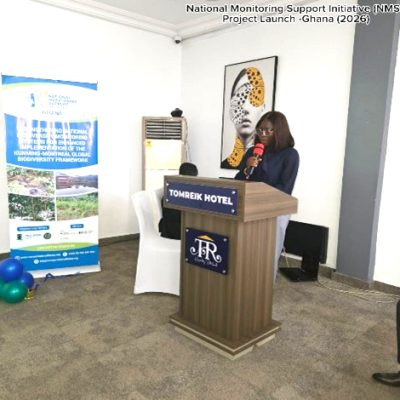
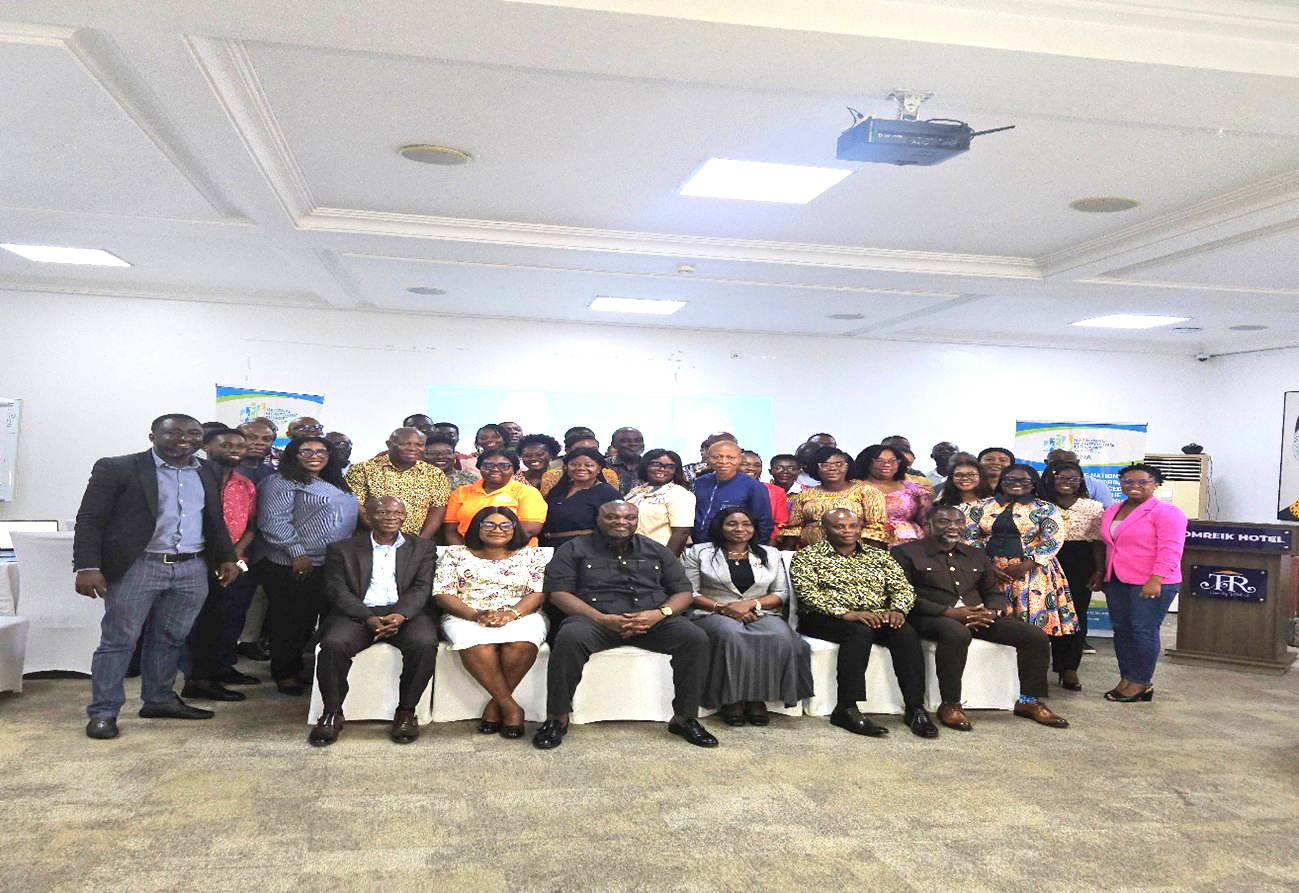
Conservation Alliance International, in collaboration with the Ministry of Environment, Science, Technology and Innovation (MESTI) and the United Nations Environment Programme World Conservation Monitoring Centre, officially launched the National Monitoring Support Initiative (NMSI) Project on the 7th of May,2026 at Tomreik Hotel, Accra- Ghana.
The initiative, which will run from 2025 to 2030, is aimed at strengthening Ghana’s biodiversity monitoring and reporting systems in line with the targets of the Convention on Biological Diversity and the Kunming Montreal Global Biodiversity Framework.
Funding support for the project is being provided through the International Climate Initiative under the German Government’s environmental support programme.
The NMSI Project is expected to improve national biodiversity data collection, coordination and reporting systems by assessing existing monitoring structures, identifying institutional and technical gaps and supporting the development of a more coordinated national biodiversity information system.
Key components of the initiative include the development of a National Biodiversity Monitoring Plan, strengthening institutional and technical capacity across relevant agencies and establishing a national biodiversity data platform connected to global biodiversity reporting systems.
Delivering the keynote address at the launch, Madam Suweibatu Adam, Chief Director at MESTI, highlighted the importance of credible and accessible biodiversity data in supporting environmental protection and sustainable development efforts in Ghana.
She noted that Ghana’s forests, wetlands, savannahs, marine ecosystems and coastal landscapes continue to play a vital role in supporting livelihoods, economic growth and ecological balance, but remain under increasing pressure from climate change, land degradation, pollution and unsustainable human activities.
According to her, strengthening biodiversity monitoring systems will support evidence-based policymaking, improve conservation planning, and enhance Ghana’s ability to measure progress on both national and international environmental commitments.
Madam Suweibatu further stressed that biodiversity monitoring should serve as a practical tool for accountability, informed decision making and long-term environmental management rather than being treated as a standalone exercise.
She therefore called for stronger collaboration among government institutions, academia, civil society organizations, local communities and development partners to ensure the successful implementation of the initiative.
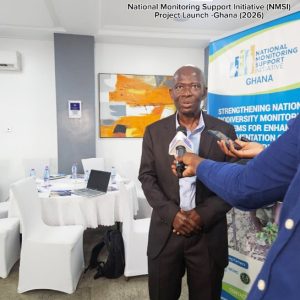
Speaking at the event, Dr. Yaw Osei-Owusu said the project would position Ghana to significantly improve its biodiversity monitoring and reporting systems by 2030.
He explained that institutions including the Environmental Protection Agency Ghana, the Forestry Commission Ghana, research institutions, academia and development partners would play critical roles in the implementation process.
Dr. Osei-Owusu noted that the initiative adopts an inclusive national approach designed to ensure that Ghana’s biodiversity priorities remain aligned with global environmental standards and reporting obligations.” immediate priorities under the project include conducting a national capacity assessment and developing a comprehensive biodiversity monitoring framework to guide implementation and future policy actions” He added.
As part of the launch programme, stakeholders from key national institutions delivered technical presentations on biodiversity monitoring and data management in Ghana.
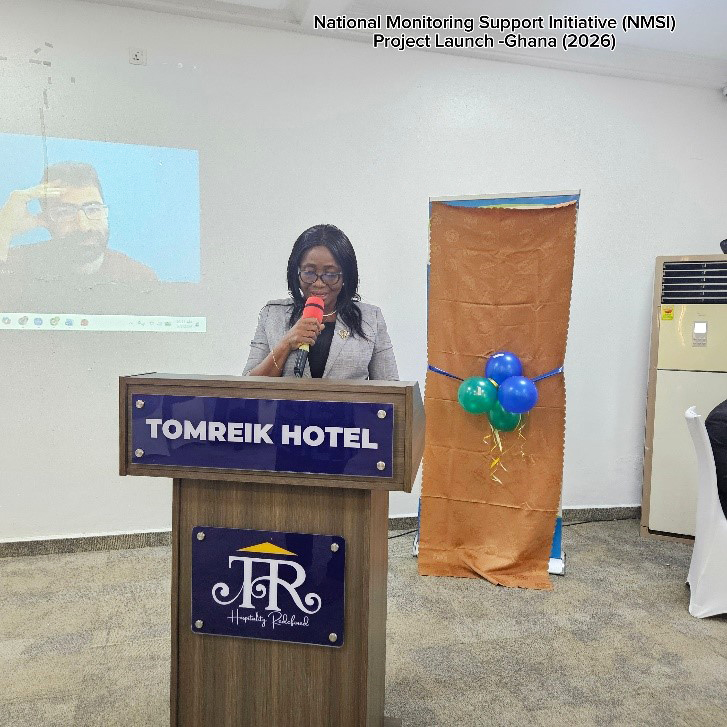
Representing United Nations Environment Programme World Conservation Monitoring Centre, Ayesha Wijesekera provided an overview of the National Monitoring Support Initiative and its expected contribution to strengthening biodiversity monitoring systems across participating countries.
Mrs. Eunice Nuerkie Ofoli Anum of the Fisheries Commission Ghana presented on marine and coastal biodiversity monitoring, highlighting the importance of sustainable ecosystem management within Ghana’s coastal and marine environments.
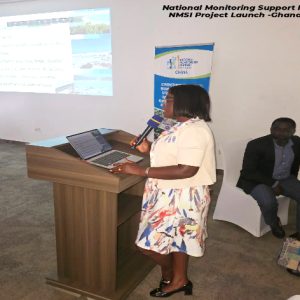
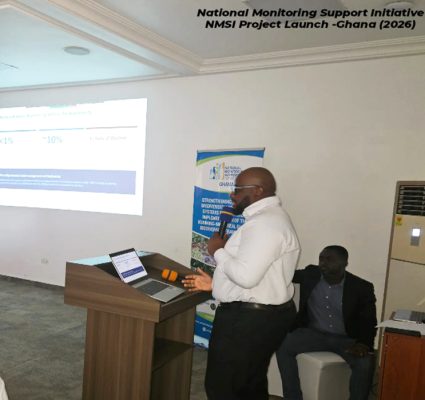
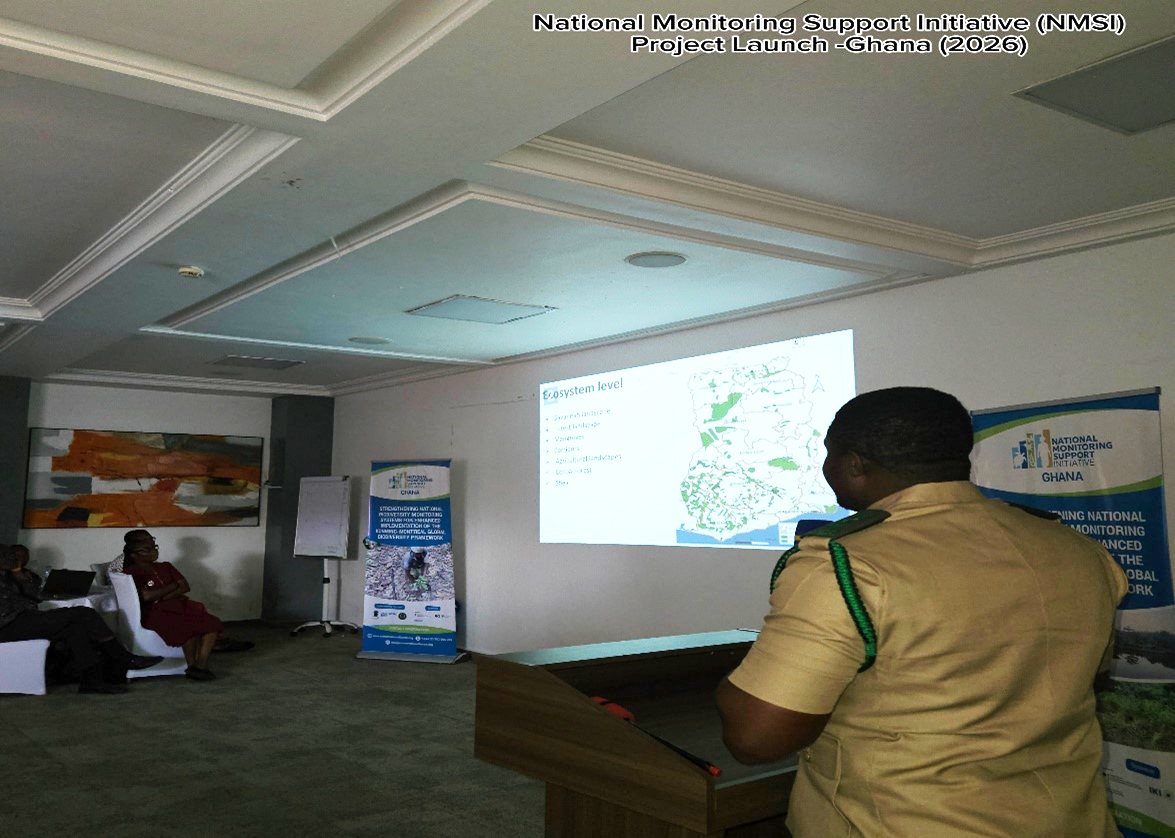
Mr. Hubert from the Water Resources Commission Ghana delivered a presentation on inland water monitoring systems in Ghana and the need for improved data collection to support freshwater ecosystem conservation.
Dr. Godfred Bempah from the Forestry Commission Ghana also presented on terrestrial biodiversity monitoring, focusing on the importance of tracking changes within forest and land ecosystems to support effective conservation planning and sustainable resource management.
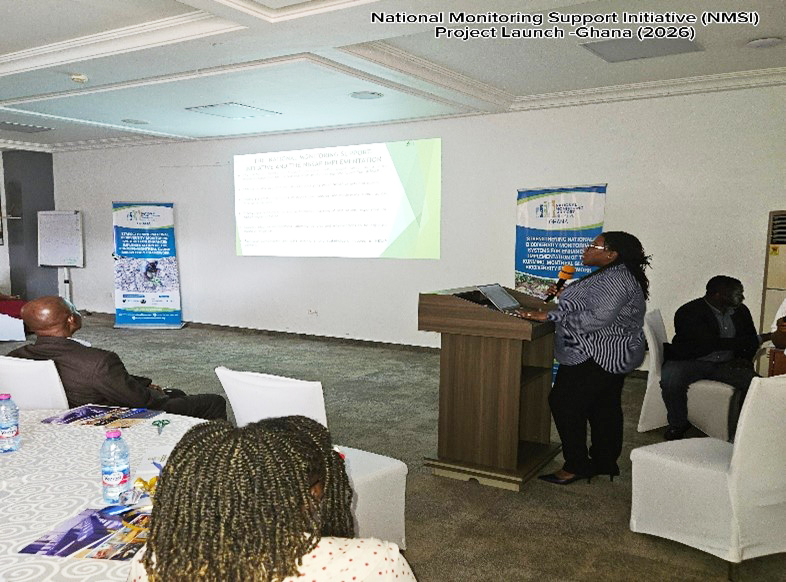
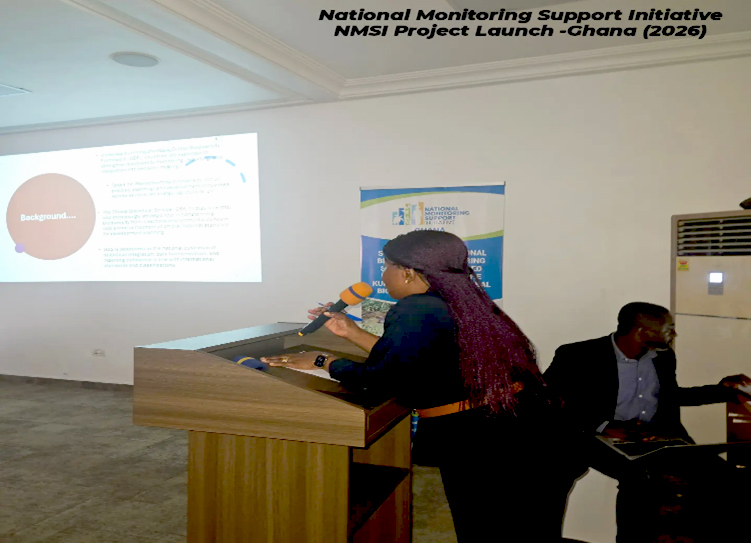
Madam Emelyne from the Ministry of Environment, Science, Technology and Innovation (MESTI) also delivered remarks on behalf of the Convention on Biological Diversity focal point, reaffirming Ghana’s commitment to improving biodiversity reporting systems and strengthening national environmental governance.
Bernice Ofosu Baadu from the Ghana Statistical Service spoke on the role of data in national planning and biodiversity related development processes, stressing the importance of reliable statistics in shaping environmental policy and decision making.
The event also featured a panel discussion and interactive question and answer session, providing stakeholders and participants the opportunity to discuss implementation priorities, institutional coordination, and the future of biodiversity monitoring in Ghana.
The session concluded with a presentation by Raymond Owusu Achiaw on the next steps
following the launch of the initiative, outlining implementation expectations, stakeholder engagement processes and upcoming project activities.
The programme officially ended with a vote of thanks delivered by Ama Akyema Sasu, who expressed appreciation to all participants, partner institutions, presenters, and stakeholders for their contributions and commitment towards strengthening biodiversity monitoring efforts in Ghana.
The launch brought together representatives from government agencies, development organisations, environmental institutions, academia and civil society groups, reaffirming a shared commitment to strengthening biodiversity monitoring and environmental governance in Ghana
Story by: Deborah Acheampong
(Journalist | Freelance Writer | Communications Expert)
Conservation Alliance International
8th May, 2026